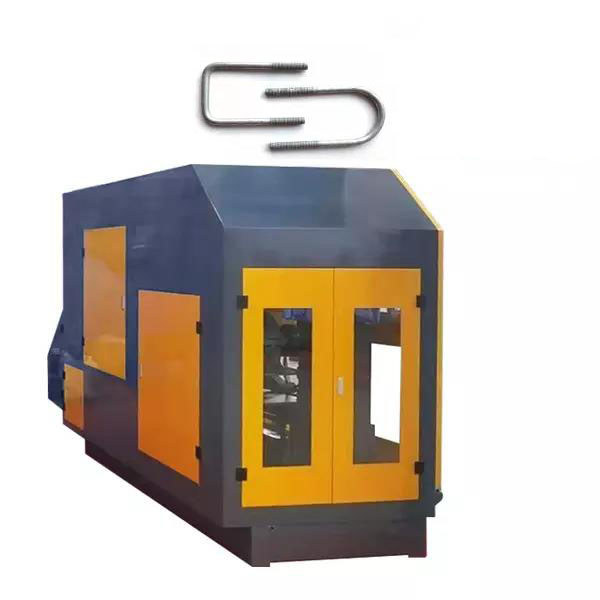
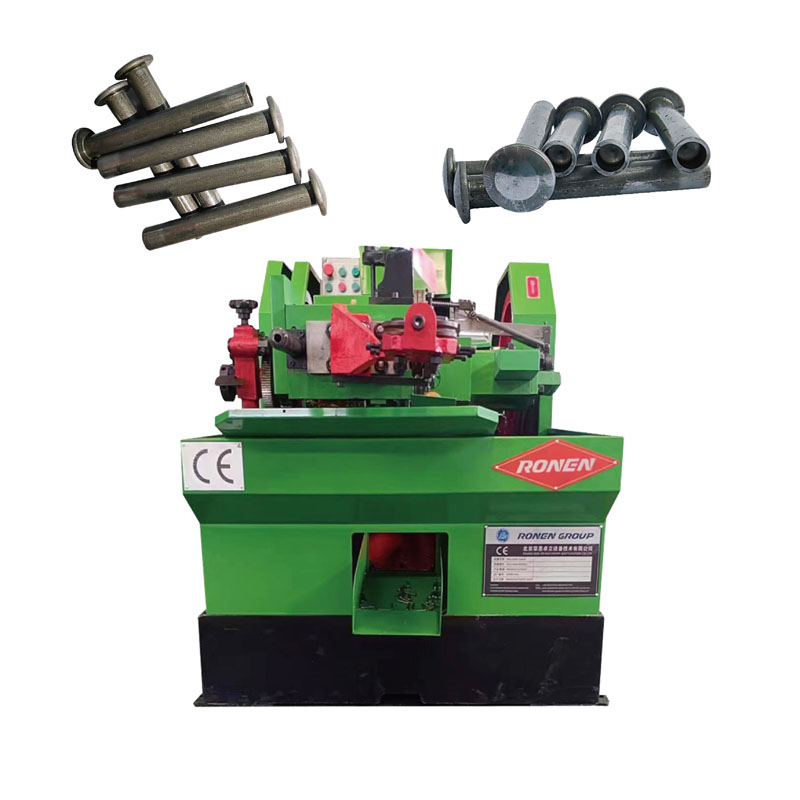
A Multi Station Cold Heading Machine is a highly efficient piece of industrial equipment designed for the mass production of fasteners such as bolts, screws, rivets, and pins. Unlike traditional machining, which removes material through cutting, cold heading shapes metal using high-pressure forming at room temperature. This process not only reduces material waste but also enhances the mechanical strength and surface finish of the final product.
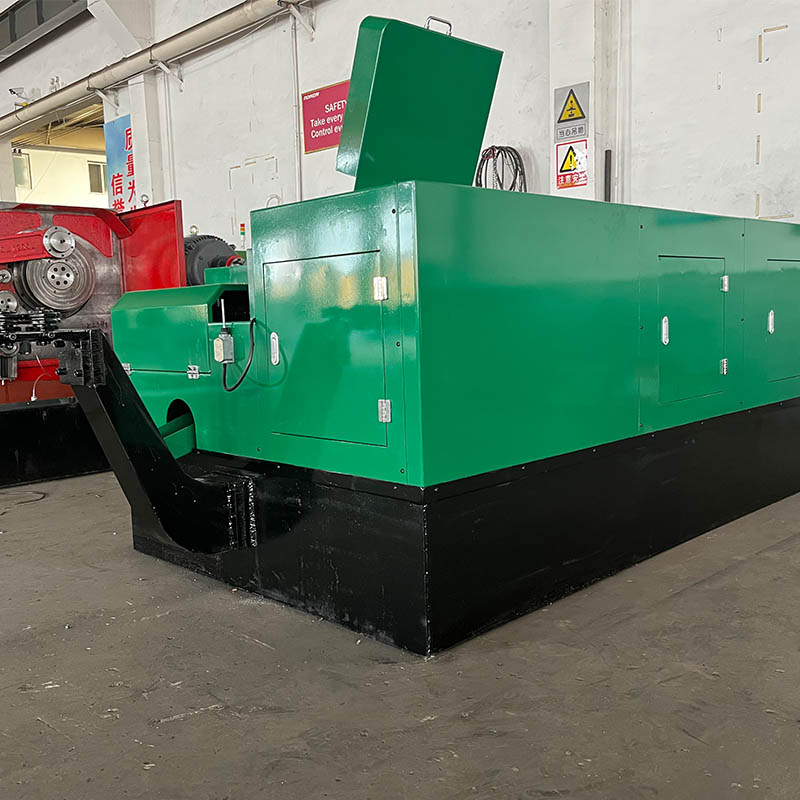
The machine operates through multiple sequential stations — each performing a specific operation such as cutting, heading, piercing, trimming, or threading. The raw material, usually a wire or rod, passes through each station, gradually transforming into a precise, high-strength fastener.
| Parameter | Specification |
|---|---|
| Model Range | 3-Station to 7-Station Machines |
| Applicable Material | Carbon Steel, Stainless Steel, Alloy Steel, Copper, Aluminum |
| Wire Diameter Capacity | 2 mm – 30 mm |
| Production Speed | 50 – 300 pieces per minute |
| Max Heading Force | Up to 1000 kN |
| Feeding System | Automatic wire feeding and cutting |
| Control System | PLC Control with Digital Display Interface |
| Lubrication | Automatic centralized lubrication system |
| Accuracy | Dimensional tolerance within ±0.02 mm |
| Power Supply | 380V / 50Hz / 3 Phase (customizable) |
Through the synchronization of precision dies, punches, and transfer mechanisms, the Multi Station Cold Heading Machine ensures consistency, dimensional accuracy, and productivity across high-volume production runs. It is widely applied in industries such as automotive, aerospace, construction, and electronics, where reliable and high-quality fasteners are essential.
The significance of the Multi Station Cold Heading Machine lies in its ability to improve efficiency, reduce material waste, and ensure consistency — three critical factors in today’s competitive manufacturing landscape.
Cold heading minimizes material loss by reshaping metal instead of cutting it away. This allows manufacturers to achieve up to 30–50% savings in raw material usage, particularly beneficial for costly materials like stainless steel or brass.
With multiple stations working in synchronization, the machine can produce hundreds of components per minute. Its automated feeding and continuous forming process drastically reduce cycle times, enhancing throughput and meeting large-scale production requirements.
Cold forming refines the metal grain structure, increasing tensile strength and fatigue resistance without additional heat treatment. Fasteners produced through this process exhibit superior mechanical performance compared to those made by traditional machining.
Since the cold heading process operates at room temperature, it eliminates the need for heating furnaces or expensive post-machining treatments, resulting in significant energy savings and lower operational costs.
Multi Station Cold Heading Machines can be configured to produce an extensive range of components — from small precision electronic fasteners to large automotive bolts. The modular tooling design allows manufacturers to quickly adapt to new designs and production needs.
In short, this technology stands at the intersection of efficiency, sustainability, and performance, representing a cornerstone of advanced manufacturing systems worldwide.
The future of metal forming technology is moving toward automation, precision, and sustainability — areas where Multi Station Cold Heading Machines are set to play a leading role.
Modern versions are equipped with PLC and touch-screen interfaces, allowing for real-time monitoring of temperature, pressure, and tool wear. Integration with Industry 4.0 technologies enables predictive maintenance and data-driven optimization, reducing downtime and extending machine life.
Upcoming models are adopting laser measurement systems and automatic defect detection to ensure consistent quality across millions of parts. This innovation significantly reduces manual inspection time and enhances quality assurance.
With growing emphasis on sustainable manufacturing, cold heading’s energy-efficient and waste-free nature makes it a preferred choice. Manufacturers are increasingly opting for lubricant recycling systems and low-emission hydraulic units to align with environmental standards.
Next-generation machines feature modular designs that allow quick reconfiguration between product types. This flexibility supports customized production and shorter lead times, catering to the market demand for diversified fastener specifications.
Robotic automation is becoming standard in modern factories. Coupled with robotic feeding and packaging systems, the Multi Station Cold Heading Machine ensures fully automated fastener production lines, optimizing labor efficiency and reducing human error.
As lightweight and high-strength materials become common in automotive and aerospace industries, cold heading machines are evolving to handle titanium alloys and high-carbon steels. These advancements enable the production of complex geometries and multi-material fasteners, once considered impossible through cold forming.
In essence, the evolution of the Multi Station Cold Heading Machine symbolizes the technological transformation of metalworking industries—balancing productivity with precision and sustainability.
A1: These machines are designed to handle a wide range of materials including carbon steel, stainless steel, alloy steel, copper, aluminum, and brass. The key factor is the ductility of the metal at room temperature. Proper lubrication and die design ensure smooth forming without cracks or deformation.
A2: Cold heading compresses the metal’s grain structure rather than cutting through it. This produces parts with enhanced structural integrity, higher tensile strength, and better dimensional accuracy. The absence of heat treatment prevents microstructural weakening, resulting in a more durable product with excellent surface finish.
The Multi Station Cold Heading Machine represents a milestone in the fastener manufacturing industry—merging speed, precision, and sustainability into one cohesive system. From its robust performance in high-volume production to its energy-efficient design, it offers a comprehensive solution for industries seeking excellence in fastener production.
As manufacturing continues to evolve toward intelligent automation and environmental responsibility, Ronen remains committed to delivering cutting-edge cold heading solutions that meet the challenges of modern production. Each machine is engineered to provide superior efficiency, minimal waste, and exceptional reliability, ensuring long-term value for customers across global markets.
To explore how Ronen’s Multi Station Cold Heading Machines can optimize your production line and enhance output quality, contact us today for technical consultation and customized solutions.