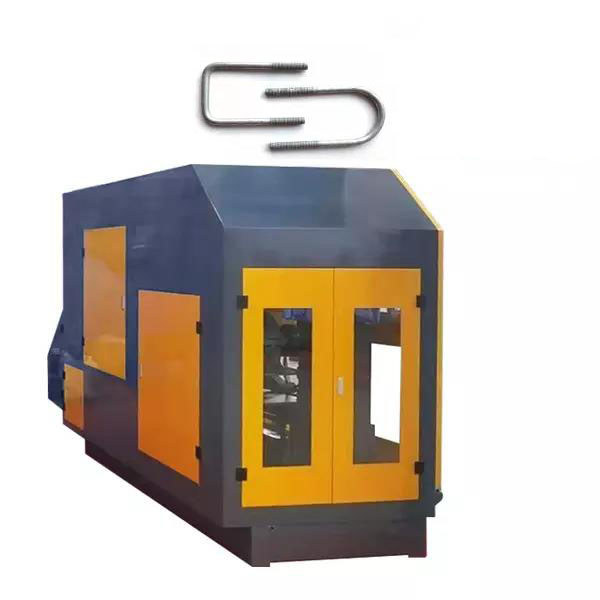
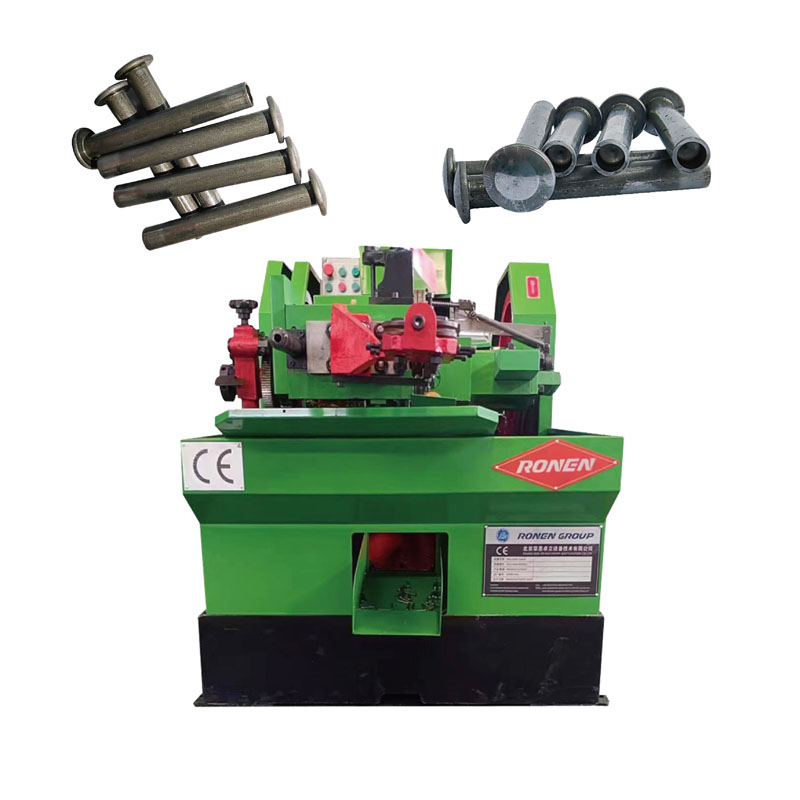
A Rivet Part Cold Forming Machine is a specialized high-speed metal forming system engineered to convert wire or rod material into rivets, semi-tubular rivets, solid rivets, and other precision fastening components through multi-station cold forging operations. This type of equipment is widely used in industries such as automotive, aerospace, construction hardware, and electronics because it supports large-scale production with excellent dimensional accuracy, repeatability, and material utilization.
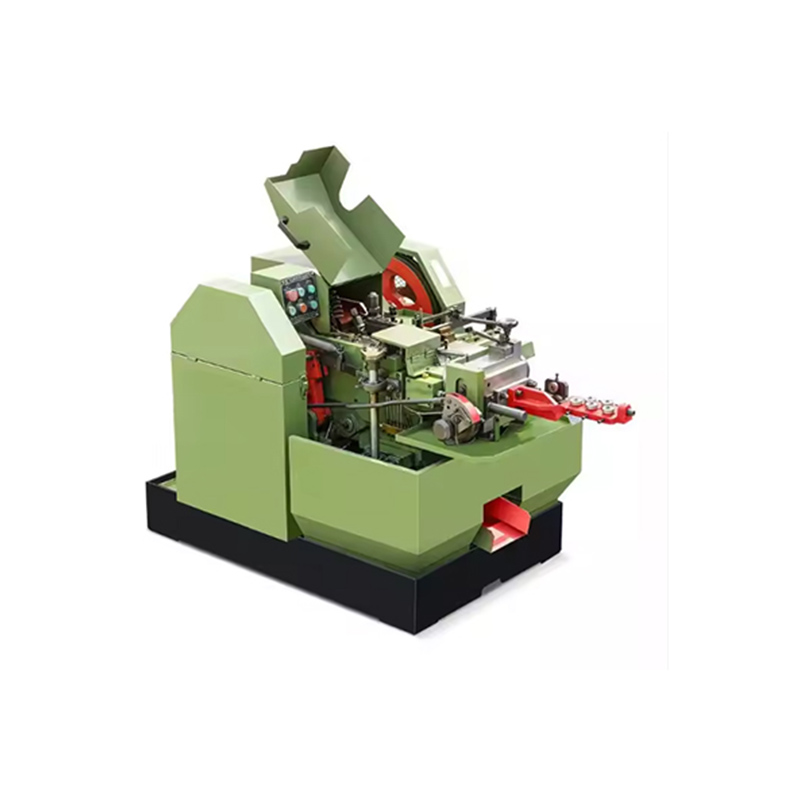
A Rivet Part Cold Forming Machine functions by feeding coiled steel wire through a precision-controlled system that straightens, cuts, and compresses the material within a multi-die, multi-station forming environment. Each station performs specific deformation stages such as upsetting, heading, extrusion, piercing, trimming, or finishing. Because the forming process occurs below recrystallization temperature, material grain flow is preserved, resulting in stronger fasteners compared to components produced by machining or hot forging.
(Structured for professional technical review)
| Parameter Category | Specification Range | Description |
|---|---|---|
| Forming Stations | 2–7 stations | Determines shaping complexity and production flexibility |
| Wire Diameter Capacity | 1.5–12 mm | Supports manufacturing of micro rivets to heavy-duty structural rivets |
| Production Speed | 80–350 pcs/min | Varies by model, material hardness, and part geometry |
| Cutting Accuracy | ±0.02–0.05 mm | Ensures uniform rivet length and stable mass production |
| Die Changeover Time | 20–60 minutes | Depends on tooling system design and operator proficiency |
| Main Motor Power | 7.5–45 kW | Correlates with forming force and machine tonnage |
| Lubrication System | Forced circulation or mist | Ensures die life, stability, and consistent forming force |
| Control System | Mechanical, pneumatic, or servo-assist | Enables speed regulation, fault detection, and forming accuracy |
| Materials Supported | Alloy steel, carbon steel, stainless steel, copper, aluminum | Enables wide-range production for various applications |
This technical foundation enables manufacturers to transition from low-speed machining to high-volume automated forming. The resulting rivet components exhibit excellent concentricity, tensile strength, and surface integrity.
The machine’s forming mechanics reinforce radial compression while aligning axial material flow, reducing structural defects and ensuring high mechanical performance. This is critical for load-bearing rivets used in automotive chassis, aircraft assembly, and structural engineering components.
Cold forming minimizes raw material waste compared to traditional cutting or turning processes. Because nearly all input metal is converted into usable part volume, material efficiency can exceed 95%. Combined with high-speed forming cycles, this technology dramatically lowers unit cost in mass-production environments.
Multi-station forming ensures that each deformation step is controlled with mechanical precision. The resulting rivets maintain consistent tolerances, making them suitable for automated riveting lines, robotic assembly systems, and other high-demand manufacturing processes.
Advanced models integrate overloading protection, automated lubrication, bearing temperature monitoring, and forming fault detection. These safeguards support long-term uptime, reduce unexpected downtime, and extend tooling life.
Growing industrial sectors—including EV automotive, lightweight aerospace structures, and smart building systems—continue to increase demand for rivets with complex geometries, higher load requirements, and improved performance under vibration or thermal expansion. Cold forming remains the preferred method for producing such rivets due to its efficiency, metallurgical advantages, and adaptability.
Transition toward lightweight metals
Manufacturers increasingly use aluminum and hybrid alloys to reduce the weight of vehicles and machinery. Cold forming systems designed to handle such materials offer strategic advantages by maintaining structural performance while supporting large-volume manufacturing.
Automation in fastener production
Integration with servo feeders, automated inspection modules, and digital quality tracking platforms increases productivity and reduces labor dependence.
Sustainability and waste reduction initiatives
Cold forming minimizes machining scrap and lowers energy consumption per unit, supporting environmental compliance standards across global markets.
Demand for customization at scale
Multi-station forming enables customization without compromising cycle speed, making it easier to meet application-specific rivet requirements.
Q1: How does a Rivet Part Cold Forming Machine ensure dimensional accuracy during high-speed production?
A1: Accuracy is managed through coordinated die alignment, precision cut-length control, and stable wire feeding synchronized with the forming stations. The system maintains repeatable forming force, uses hardened alloy tool steel for dies, and integrates real-time lubrication to reduce thermal expansion. Mechanical tolerances within the forming cavity ensure each rivet maintains uniform head shape, body diameter, and shank length even at maximum production rates.
Q2: What maintenance practices help maximize forming stability and prolong die life?
A2: Maintenance routines include scheduled die polishing, forming cavity inspection, lubrication system cleaning, monitoring wire straightness, and ensuring proper cooling oil levels. Operators should regularly check guide alignment, fastener ejector performance, and bearing temperature to prevent micro-deformation that can lead to tolerance drift. Periodic vibration analysis helps identify early signs of imbalance or wear.
A Rivet Part Cold Forming Machine does not operate as a stand-alone asset; it is part of a broader fastener production ecosystem. Manufacturers should assess their upstream and downstream workflows—from wire preparation and heat treatment to quality inspection and packaging—to maximize ROI.
Material Preparation: Choosing appropriate wire grade, hardness, and coating affects formability and tool life.
Die Engineering: Tooling design should consider grain flow, pressure distribution, and clearance transitions.
Lubrication Management: Proper lubrication reduces die wear and prevents galling.
Inline Inspection: Dimensional gauges and crack detection systems reduce defect rates before secondary processes begin.
Companies investing in Rivet Part Cold Forming Machines typically aim to achieve one or more of the following outcomes:
Increase production speed to meet expanding customer demand.
Replace machining to reduce cost per unit.
Improve rivet tensile strength and fatigue resistance.
Expand into new fastener markets such as aerospace-grade rivets or high-precision micro fasteners.
Reduce operational variability in mass manufacturing.
Enterprises adopting cold forming systems gain strategic competitive benefits by delivering high-volume rivet output with uniformity, precision, and lower overhead compared to machining-based workflows. These capabilities enable manufacturers to supply OEMs with consistent quality assurance across global platforms.
This analysis demonstrates how a Rivet Part Cold Forming Machine supports high-speed, high-accuracy rivet production across diverse industrial sectors while reducing manufacturing costs and improving structural performance. Its multi-station forming mechanics, advanced control systems, and material efficiency generate a long-term operational advantage in an increasingly competitive fastener market. For organizations seeking to enhance production capability or diversify their fastener portfolio, solutions provided by Ronen® offer reliable engineering, stable performance, and industry-tested durability.
For procurement consulting, technical specifications, or customized project evaluation, contact us to discuss how a Rivet Part Cold Forming Machine can be integrated into your manufacturing environment.