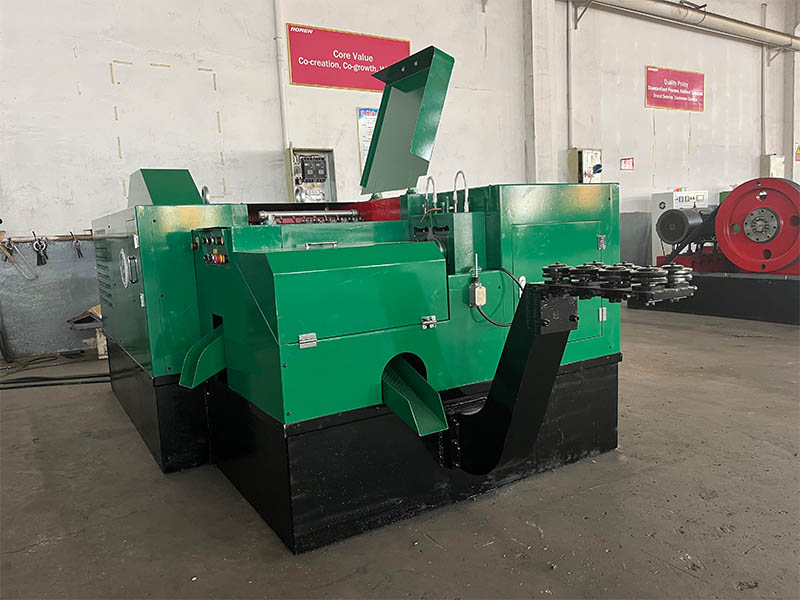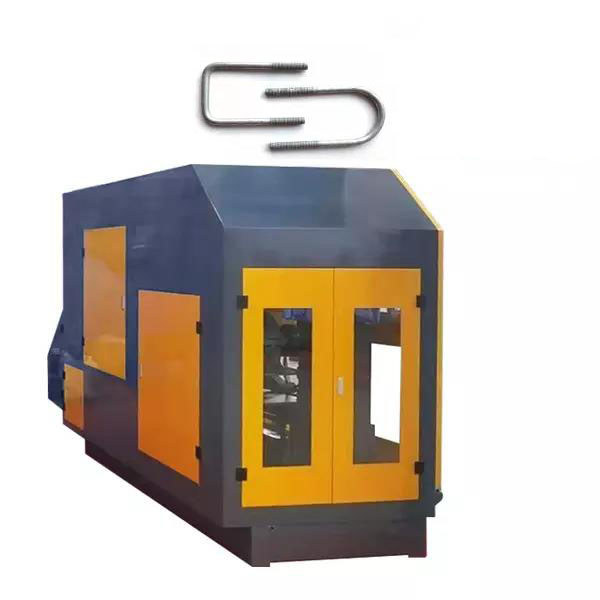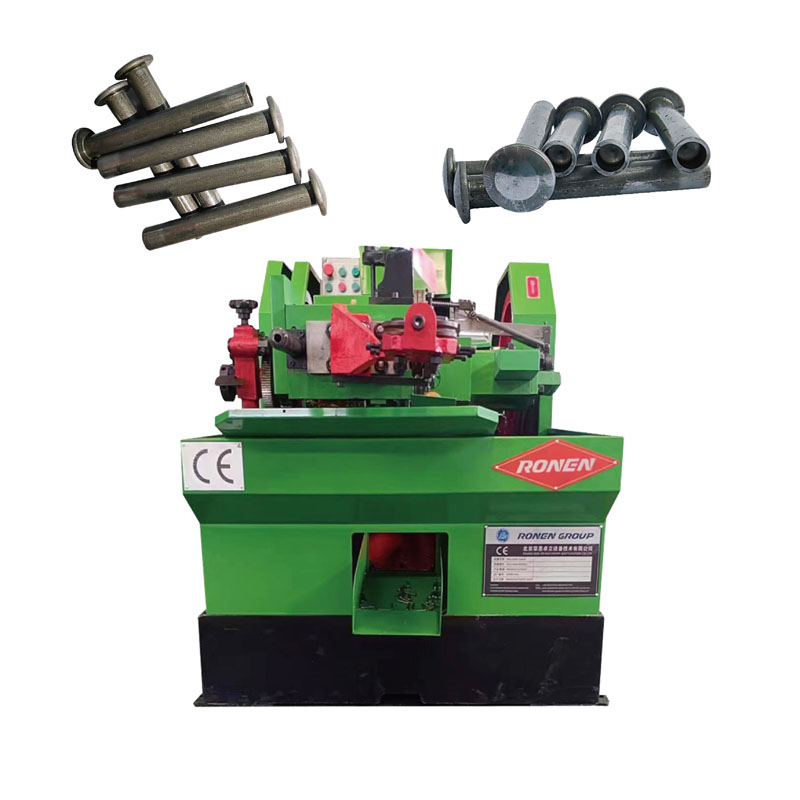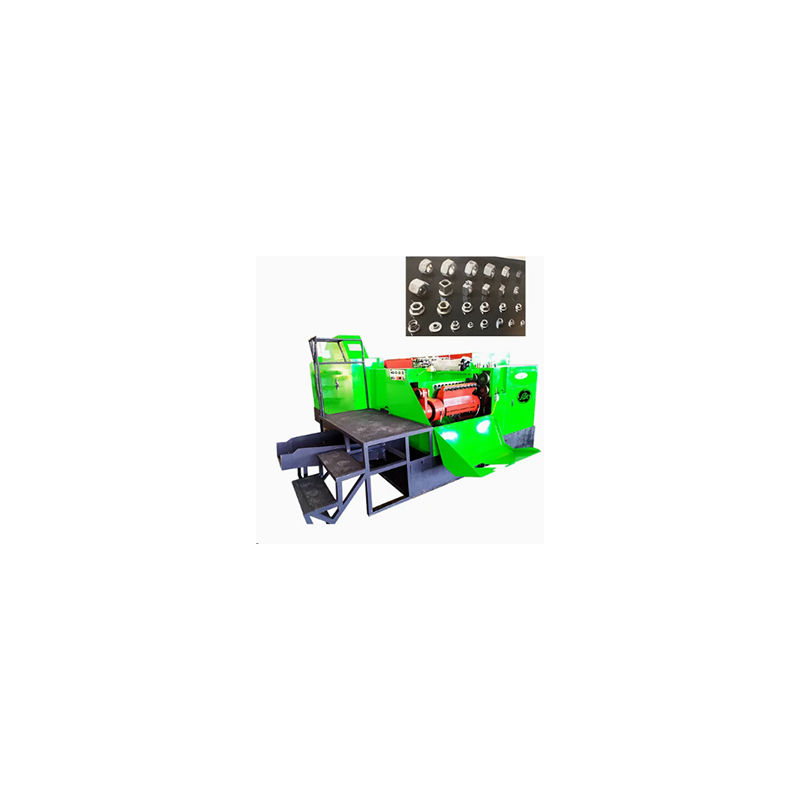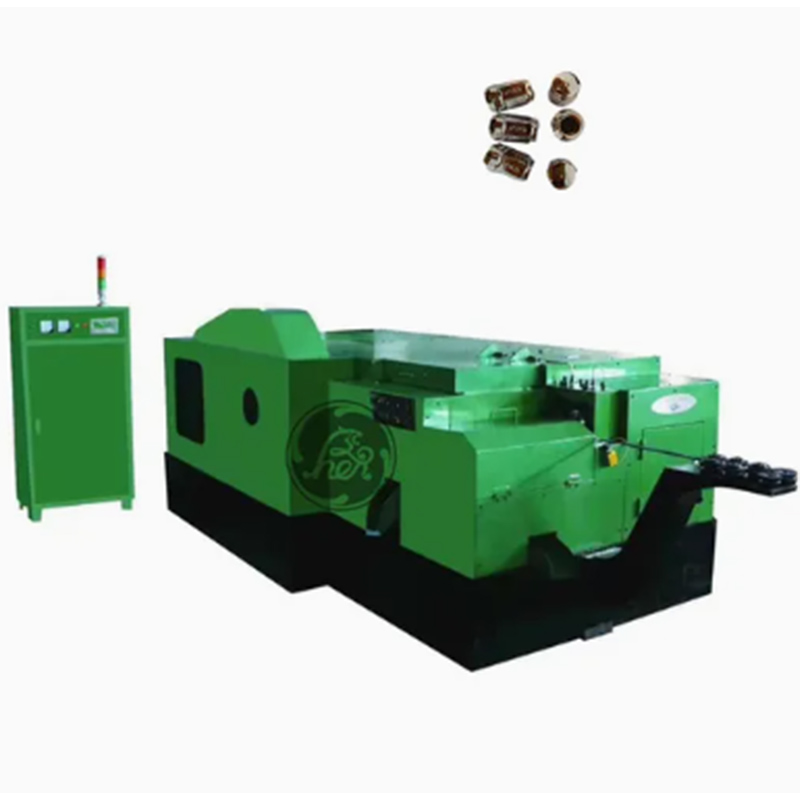
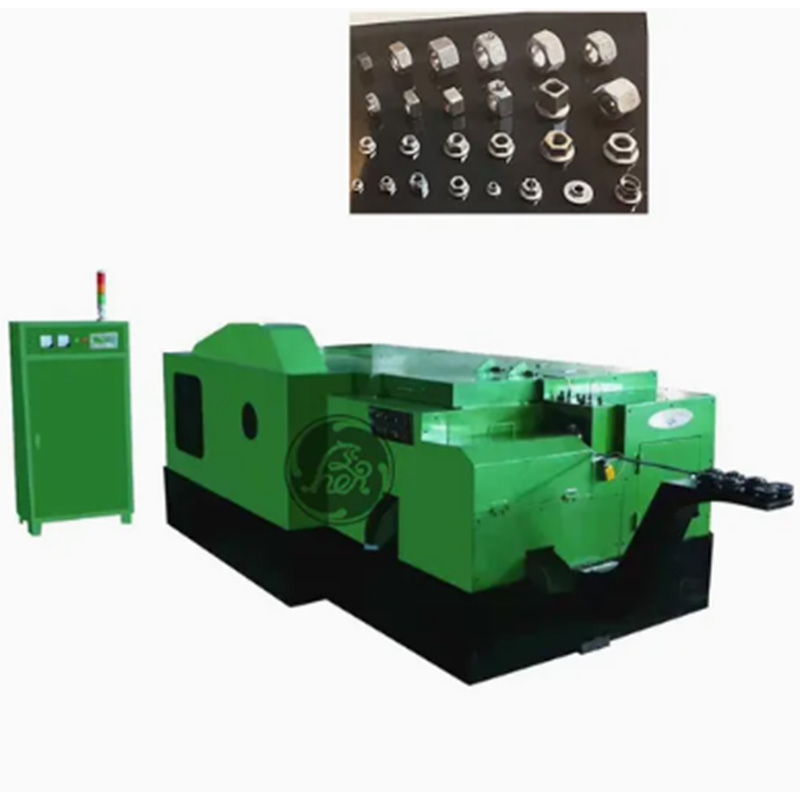
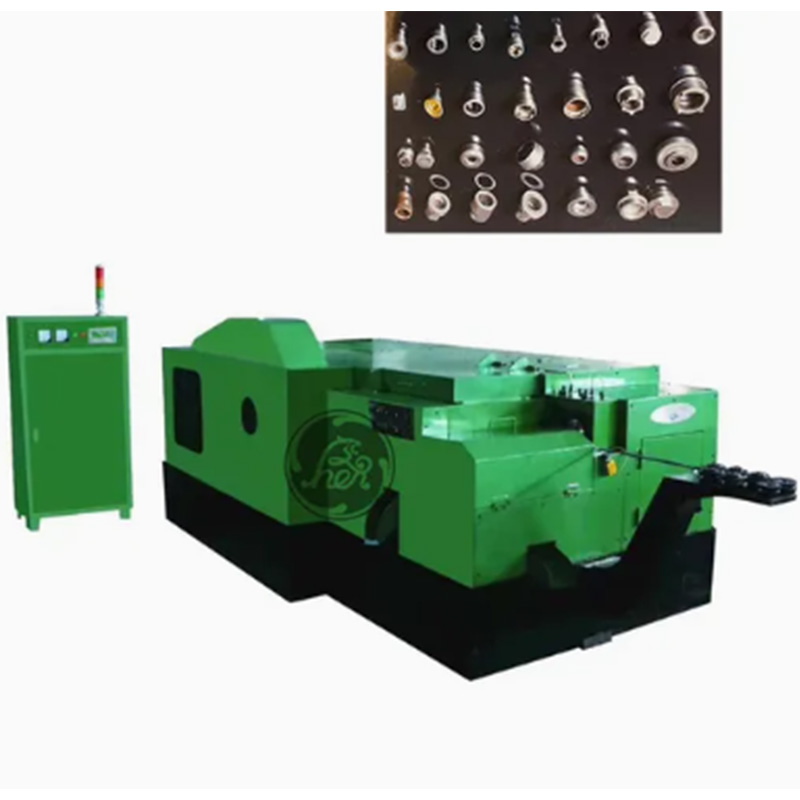
From manufacturer Ronen®, the RNF 6 3S Nut Former Machine forms the nut blanks through three key steps: wire cutting, upsetting and shaping. It is simpler than the six-position model, but faster than manual operation. You just need to put the metal wire into the feeder, and the machine will run automatically.
The RNF 6 3S Nut Former Machine processes the wire into finished nuts through three workstations. It cuts the wire blanks and feeds them into each workstation, where different tools are used to shape the metal. The machine automatically completes the entire nut manufacturing process.
When operating the nut former machine, the first step is to insert a coil. The machine will feed the coil, cut it to the desired length, and then transfer each segment of the coil to all six forming stations. Each station will perform specific operations to gradually form a complete nut.
The nut forming machine relies on the cold forging process to complete the forming process of the nut through pressure at room temperature. This process enhances the strength of the metal while consuming less energy than hot forging. Since it shapes the metal through displacement rather than cutting, it also reduces material waste.
The operation of the RNF 6 3S Nut Former Machine mainly involves the monitoring of the automated system. Operators load the coils and inspect the quality of the finished nuts. Once the machine is started, the entire forming process can be completed with almost no human intervention. Regular checks should be conducted on the wear and tear of the molds.
| Specification | Unit | 11B | 14B | 17B | 19B | 24B | 27B | 30B | 33B | 36B | 41B |
| Forging Station | No. | 6S/7S |
6S/7S |
6S/7S |
6S/7S |
6S/7S |
6S/7S |
6S/7S |
6S/7S |
6S/7S |
6S/7S |
| Max Cut-Off Dia | mm | 11 | 15 | 17 | 19 | 24 | 28 | 30 | 33 | 36 | 41 |
| Kick-out Length | mm | 20/30/40 | 20/30/40 | 25/40/60 | 25/30/40/60/80 | 30/60/80 | 30/40/60/80 | 30/40/60/80 | 40/60/80/100 | 50/60/80/100 | 50/60/80/100 |
| Dies Pitch | mm | 50 | 60 | 70 | 80 | 100 | 110 | 120 | 140 | 150 | 165 |
| Forging Power | Ton | 60 | 90 | 110 | 135 | 230 | 260 | 300 | 360 | 420 | 650 |
| Production Size |
|
M3-M6 | M6-M10 | M8-M12 | M8-M14 | M10-M18 | M12-M18 | M14-M20 | M16-M22 | M18-M24 | M20-M27 |
| Output | min/pcs | 250 | 180 | 150 | 140 | 70 | 60 | 60 | 90 | 80 | 70 |
| Main Motor | Hp | 15 | 20 | 30 | 50 | 75 | 100 | 125 | 150 | 250 | 350 |
| Lubrication | Hp | 1.5 | 1.5 | 1.5 | 1.5+3 |
1.5+3 |
1.5+3 |
1.5+3 |
1.5+3 |
1.5+3 |
1.5+3 |
| Lubricant | L | 700 | 1000 | 1100 | 1200 | 1700 | 2300 | 2000 | 2400 | 2400 | 2400 |
| Approx Weight | Ton | 4.5 | 8 | 11 | 14 | 25 | 38 | 42 | 45 | 70 | 73 |
The selling point of the RNF 6 3S Nut Former Machine is "stable feeding and quick mold change". It can firmly hold the wire and smoothly insert it in, without deviating or getting stuck. There is no need for workers to adjust the feeding. Cold heading produces no waste, and 95% or more of the wire can be used, which can save your money.